






Mental training in sport and business.
What if the most important preparation starts in your mind, long before you step into the boardroom or the meeting with your employees?!
As an Olympic athlete I prepared for almost a year using mental training to be able to handle the demands and stress in the competitive situation. In cooperation with a mind trainer, I developed strategies and mindsets, so it became possible to perform well. I was trained to recognize what happens in my body, mind and to find solutions.

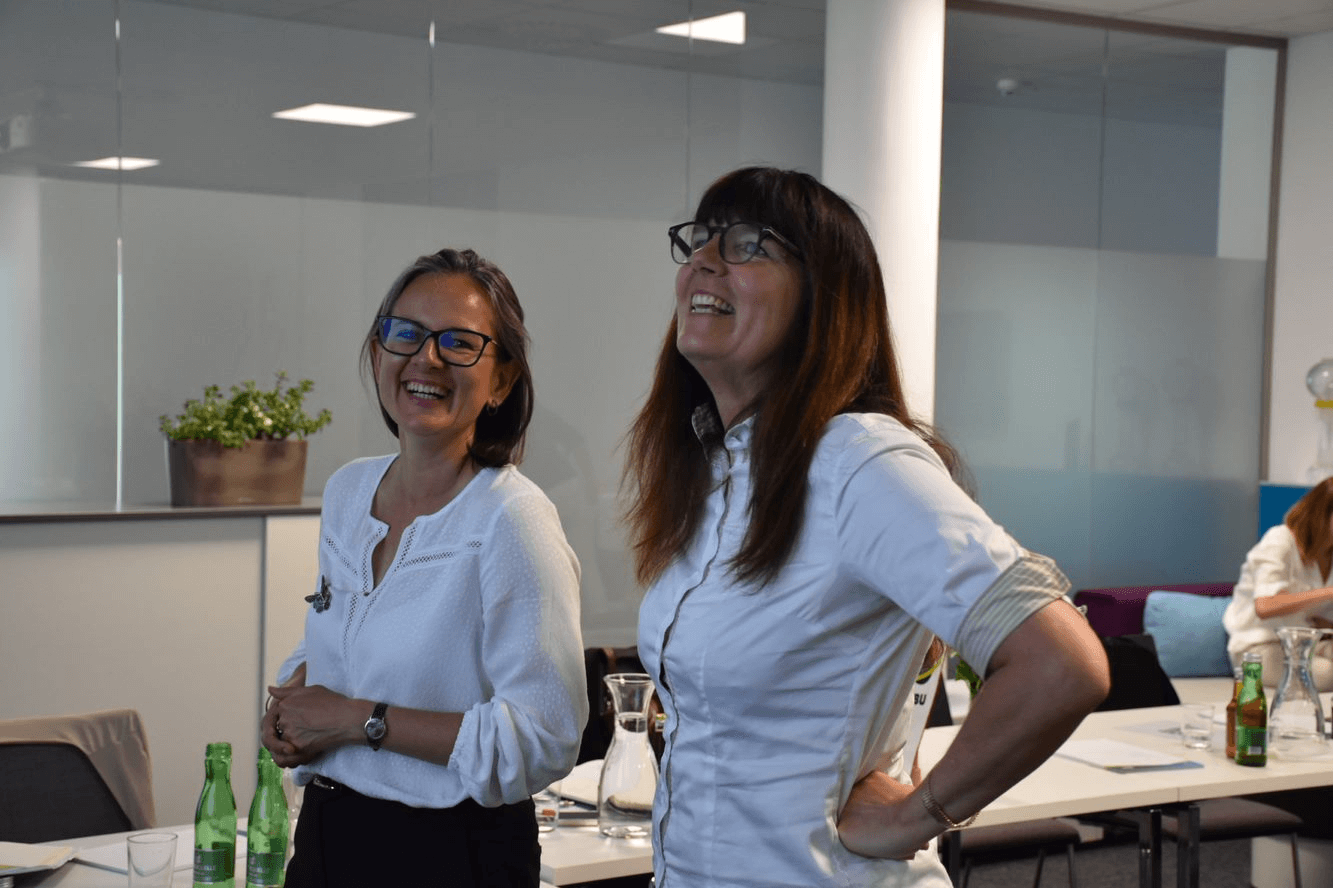
©Private photo: Anne Grethe, Board Chair & Sports Coach
Why mental training?
We can use mental training to handle the arousal that occurs when one experiences emotional discomfort (or strong worry) before or during a meeting, or in other situations with perceived pressure. Often the arousal can be felt in the body long before a competitive situation, with tension and stress reactions. Especially if the arousal and discomfort have a negative impact on daily life and work, it can be helpful to start exploring the mindset tools.

©Canva photo
What is mental training?
Mental training is systematic work with thoughts, feelings, and attitudes. It means practicing how to think more clearly, control feelings, and develop awareness. When you learn these skills better, it is possible to handle stress and deal with tough situations.
Mental training not only shapes thoughts and emotions but actively influences the brain’s structure and function. When you engage in techniques like visualization or attention training, specific neural pathways are activated and strengthened—a process known as neuroplasticity. Regions such as the prefrontal cortex (responsible for planning and decision-making), the hippocampus (linked to memory), and the amygdala (connected to emotional regulation) often become more efficient and interconnected.
How to practice?
Let’s simplify the training to 4 basic techniques: goalsetting strategies, relaxation techniques, positive inner talking and visualization.
– Goalsetting.
We need awareness when it comes to choice of goals, objectives and tasks. The use of not only outcome goals (results, numbers), but process and performance tasks adds another dimension when staying present and performing well. The demand for development is strong in performance cultures, but as individuals we must also care for our health. We can do this by having goals for our rest and recovery time, or more body specific tasks for a meeting. Like “use my belly breathing before and after…. ” or “feel my feet on the floor before I start talking”. It is about making small tasks with large impact on our daily life.
©Canva photo
– Relaxation.
In sport we teach the athletes to be able to relax in demanding situations or to develop awareness of own body to be able to perform a certain sport specific technique. We can use questions like; “am I relaxed in my face” or “are my shoulders in place” to get the attention from head to body. It can make a difference in many situations.
The difference in huge between chest breathing where I may look stressed or I become more stressed (more cortisol, higher pulse), while belly breathing can ground and relax me.
A memory comes to my mind. When doing my first competition in the Olympics, I used a relaxation program at least 2 times before the start of the match. On my bus trip to the arena that morning I was having the sound of the relaxation program in my ears. It comforted my soul, relaxed my muscles and stayed with me for a long time in the competition. Made it a good one.
Using music or meditation apps is helpful, but you can also study and learn “progressive relaxation. This is a rather old but well-developed technique. Check it out if you want to learn it all from the beginning. Another solution is to find a good yoga teacher. In yoga we can explore how breathing makes you relax and how it transforms a situation.
– Inner dialogue and strategic self-talk.
Inner dialogue is a proven thought management with the aim of having a clear focus, following chosen thought strategies and plans. We want a positive focus and a positive feeling.
Having a positive inner dialogue, as opposed to a negative one, creates completely different feelings. When speaking about inner talks we talk about positive inner sentences, trigger words or affirmations. (support sentences).
Supporting sentences are sentences that gather focus and control the thoughts. If you are going to develop your own sentences, it should be a sentence that is personal, positive and in the present sense. An example: “I am well prepared and I stand strong!”
Example of inner dialogues: First a rather negative one “I have a high pulse, and this is not going to go well”. A much better alternative is: “I have a lot of energy and motivation, and I am focused and ready to start”.
– Visualization.
Visualization is mental images to prepare and learn how to handle stressed or demanding situations.
It is a powerful tool where you can mentally rehearse actions, imagining yourself performing flawlessly. This technique reinforces neural pathways and helps the brain and body prepare for actual performance.
When you visualize, you create mental images of situations, actions or results that you want to become reality. “What you see, is what you get” is a well-known expression to explain theoutcome of this training. If you dream of hits and misses, it is easier to get just that. If you dream of performing well on stage or in the boardroom, yes, it gets you there too.
Visualization can also help you get rid of negative thoughts and fears by replacing them with constructive and goal-oriented images. Be aware, however, that a short session on the sofa while you are half asleep is not enough. It is necessary to work constructively and purposefully with the targeted images, preferably every day for months.
Summary
Competitions and the performance fields is challenging at times, and when things get really tough, let’s keep in mind that life is a learning arena! Through experiences, we practice handling challenges, time frames and adversity better. To focus and to enjoy, it helps if you are part of a healthy culture where there are people to lean on when necessary.
A life in sports or business is not the same for everyone. Lack of self-confidence and previous experiences in life can make it difficult to stay. We also know it is demanding to balance on the edge of what can be achieved. Inexplicable stagnation and underperformance can easily occur and are challenging for leaders, employees, coaches and athletes.
An intentional presence, by use of mental training, not only enhances our own well-being, but it also positively influences those around us, creating a calmer and more connected environment.
All the best for your journey!
Anne

Board Chair & Sports Coach, SheSkillz Global Mentor
-
This author does not have any more posts.